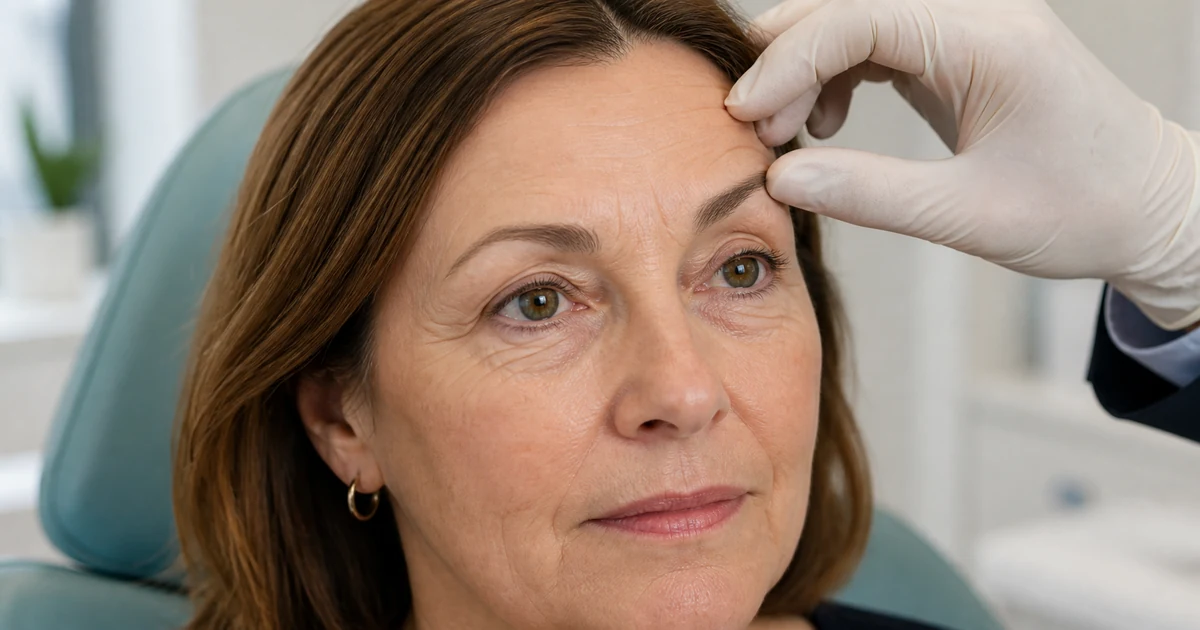
What Blepharoplasty Treats
According to NHS.uk guidance on eyelid surgery (blepharoplasty)1, the procedure addresses excess skin, muscle and fat around the eyelids. The two problems that bring most UK patients to consultation are hooding of the upper eyelids — loose skin folding down over the crease and, in more advanced cases, into the field of vision — and lower-lid "bags", where fat pads that normally cushion the eye push forward and create a puffy, tired-looking under-eye contour. Both are largely a function of skin laxity and fat-compartment changes that accumulate with age, sun exposure and genetics; neither is caused by tiredness alone, which is why concealer and sleep don't fix them.
Blepharoplasty does not treat dark circles caused by pigmentation, fine crêpe-paper lines radiating from the corner of the eye, or hollow tear-trough shadows — these are skin-quality and volume issues, not excess tissue, and need a different approach entirely (see Non-Surgical Alternatives, below). Setting this expectation clearly at consultation avoids one of the most common sources of post-operative disappointment.
Upper vs Lower Blepharoplasty
"Blepharoplasty" describes two related but distinct operations, and which one — or both — you need depends entirely on where the problem sits.
Upper Blepharoplasty
Removes excess upper-lid skin, sometimes a thin strip of underlying muscle, and occasionally a small amount of fat if it's genuinely excessive rather than needed for volume. The incision sits in the natural upper-lid crease, which is why the resulting scar typically fades to an inconspicuous line within a few months. This is the most commonly performed eyelid operation in the UK, and the one most often done under local anaesthetic as a straightforward day case.
Lower Blepharoplasty
Addresses lower-lid fat herniation ("bags") and, where present, excess skin or laxity. Two main surgical approaches are used:
- Transconjunctival — the incision is made inside the lower lid, leaving no external scar. This suits patients whose problem is fat alone, with no meaningful skin excess, and is generally considered the lower-risk approach for lid position.
- Transcutaneous — an external incision just below the lash line allows the surgeon to also excise redundant skin. It achieves more when skin laxity is significant, but carries a meaningfully higher risk of changing lower-lid position afterwards (see Risks, below).
Combined Upper and Lower
Both procedures can be performed in a single session under one anaesthetic, and this is common where hooding above and bagging below are both contributing to an overall heavy, fatigued appearance. Combining them means one recovery period rather than two, though the combined operation typically means a longer time in theatre and a preference for general anaesthetic.
Ptosis vs Excess Skin — Why the Difference Matters
Dermatochalasis is excess, redundant upper-lid skin — the skin envelope has simply stretched and sagged with age. Ptosis is a different problem entirely: a drooping of the eyelid margin itself, caused by weakness or stretching of the levator muscle and its tendon, which normally hold the lid at its correct height. The two can look superficially similar — both make the eye appear heavy and half-closed — and they frequently coexist in the same patient, but they are not the same condition and they are not fixed by the same operation.
If a patient has ptosis and only the excess skin is removed, the eyelid margin itself is still sitting too low — the skin looks tidier, but the eye still appears droopy and the underlying complaint is unresolved. Diagnosing which is present, or whether both are, relies on a specific clinical measurement called the margin-reflex distance (MRD): the distance from the centre of the pupil's light reflex to the upper-lid margin. A reduced MRD points to ptosis requiring a separate levator-repair procedure, either alone or combined with skin excision. This distinction is a routine, standard part of a proper pre-operative eyelid assessment, and it is worth asking your surgeon directly whether they have measured it.
Functional vs Cosmetic: Visual Field and the NHS
Where upper-lid hooding is severe enough to genuinely obstruct the field of vision — confirmed by a formal visual-field test, not just a subjective sense of heaviness — some NHS Integrated Care Boards (ICBs) will consider funding upper blepharoplasty as a functional procedure. Typical policy requires objective, documented visual-field loss above the horizontal meridian, sometimes specified as a minimum number of degrees, along with clinical photographs showing the skin resting on or beyond the eyelashes. Criteria, evidence thresholds and waiting times vary meaningfully between ICBs, and there is no guarantee of funding even where hooding looks visually severe. Purely cosmetic upper blepharoplasty — improving appearance without a documented functional deficit — and any lower blepharoplasty are not funded under any circumstances. See Cosmetic Surgery on the NHS for the wider funding picture across procedures.
Am I Suitable?
Most healthy adults bothered by upper-lid hooding or lower-lid bags, with realistic expectations about what surgery changes, are reasonable candidates, in line with BAAPS's general patient information on blepharoplasty2. Several factors need specific attention at consultation before booking:
- Dry-eye syndrome — blepharoplasty can measurably reduce the eyelids' ability to fully close and spread tears across the eye's surface in the weeks after surgery, and pre-existing dry eye can be temporarily or, less commonly, persistently worsened. Any history of dry, gritty or irritated eyes should be disclosed and, where relevant, formally assessed before surgery.
- Thyroid eye disease — active thyroid-related eye disease changes eyelid and orbital anatomy and needs to be medically stable before elective eyelid surgery is considered.
- Blood-thinning medication and bleeding disorders — the eyelid has a rich blood supply, and anticoagulant use needs to be discussed with the prescribing doctor around the timing of surgery.
- General health and smoking — smoking impairs skin healing and should be stopped for a defined period around surgery, on your surgeon's advice.
- Brow position — a low or heavy brow can mimic upper-lid hooding. A proper assessment checks where the brow sits, since brow ptosis needs a brow lift, not an eyelid operation, to correct.
The Procedure & Anaesthetic
Upper blepharoplasty alone is very often performed under local anaesthetic with light intravenous sedation, as a day case lasting roughly an hour. Lower blepharoplasty, and most combined procedures, are more commonly done under general anaesthetic, particularly where skin excision or more extensive fat repositioning is planned. As with any procedure involving a general anaesthetic or sedation, the anaesthetist is a separate GMC-registered doctor from the surgeon, and their fee should appear as its own line on a transparent quote — see Anaesthetic and Safety.
The surgeon marks the planned incisions with you sitting upright beforehand, since lid position and crease height look different lying flat. Excess skin, and where indicated a thin strip of muscle, is removed through the marked incision; herniated fat is either removed or, increasingly, conservatively repositioned to smooth the lid-cheek junction rather than leave a hollow. Incisions are closed with fine sutures — dissolvable or removed at around a week, depending on technique.
Recovery Timeline
Eyelid skin is thin and heals visibly faster than most other areas of the body, but swelling and bruising still follow a predictable pattern:
- Days 1–3: peak swelling and bruising, often more dramatic-looking than the surgery itself would suggest because eyelid skin bruises so readily. Cold compresses and sleeping with the head elevated help. Vision may be temporarily blurred from ointment or mild swelling — this is normal and expected.
- Days 5–7: non-dissolvable sutures are removed if used. Most bruising has faded from deep purple to yellow-green and is coverable with concealer.
- Weeks 2–4: most patients feel comfortable in public without concealer by this point; residual swelling, particularly of the lower lid, can take a little longer to fully settle.
- 6–8 weeks: scars have faded significantly and eye comfort — any residual dryness or tightness — has usually normalised.
- 3 months: swelling has fully resolved and the final contour is visible; scars continue to soften for several more months after this.
Contact lenses are usually avoided for one to two weeks, and strenuous exercise, swimming and anything that risks a blow to the eye is typically restricted for around four weeks. Read the fuller day-by-day detail in Eyelid Surgery Recovery.
Risks — Including Lower-Lid Specific
A proper consent conversation for blepharoplasty should cover the general risks of any eyelid surgery and the specific risks of lower-lid surgery, in line with the general surgical-risk information set out by BAAPS2 and NHS.uk1:
- Bleeding and infection — uncommon in a well-vascularised area that heals quickly; infection usually resolves promptly with antibiotics.
- Dry, irritated or watery eyes — a temporary reduction in blink completeness and tear-film distribution is common in the first weeks after surgery; a study assessing the ocular surface and tear film specifically after upper blepharoplasty4 found measurable changes that persisted through the study's full 6-month follow-up, with no resolution shown by that point — whether these changes fully resolve later isn't established by this paper — which is why pre-existing dry eye needs disclosing and, where significant, assessing before surgery.
- Asymmetry — of crease height, scar position or the amount of skin or fat removed on each side; a small degree of asymmetry is common and usually minor.
- Ectropion and lid retraction — the lower lid pulling away from the eye or sitting lower than before surgery. This is specific to lower blepharoplasty and sometimes needs further surgery to correct. A review of physical findings contributing to post-blepharoplasty lower-eyelid retraction by Griffin et al.3 identified orbicularis oculi weakness, negative-vector eyelid anatomy, volume deficiency and lid laxity as contributing factors, with middle-lamellar scarring significant in only a minority (17%) of the cases reviewed.
- Vision changes — most commonly temporary blurring from ointment or swelling. Very rarely, bleeding behind the eye (retrobulbar haematoma) causes sudden vision loss — a genuine surgical emergency; sudden eye pain with vision change after surgery is a 999 call, not a wait-and-see situation.
- Scarring — upper-lid crease scars are usually very inconspicuous; lower-lid external scars, when used, can occasionally remain visible or cause mild lower-lid changes.
Ask specifically how your surgeon manages lower-lid position risk — for example, whether they routinely assess lower-lid laxity with a "snap-back" test before recommending a transcutaneous approach — since this is one of the more technique-dependent risks in cosmetic surgery.
Cost in the UK
Upper blepharoplasty alone typically costs £3,000–£4,500; lower blepharoplasty £4,000–£6,000, reflecting its greater technical demands; combined upper and lower surgery sits at £5,500–£7,500 and above. As with any cosmetic procedure, a fair quote should itemise the surgeon's fee, the anaesthetist's fee if sedation or general anaesthetic is used, the facility fee, and a defined number of follow-up appointments, rather than bundling everything into a single number. See the full breakdown in the UK blepharoplasty cost guide.
Non-Surgical Alternatives
Skin-tightening energy-based devices and non-ablative laser treatments can offer modest improvement for mild skin laxity, but they cannot remove genuinely excess skin or reposition herniated fat the way surgery does — they suit patients with very early changes, not established hooding or bags. Hyaluronic-acid filler placed carefully in the tear trough can soften the shadow that makes under-eye bags look worse, but it addresses volume loss beside the bag, not the bag itself, and poor technique here can make the area look puffier rather than better.
Choosing a Practitioner
"Cosmetic surgeon" is not a protected title in the UK, so the most useful check is whether your surgeon appears on the GMC Specialist Register. Eyelid surgery sits at the crossover of oculoplastic (ophthalmology-trained) and facial plastic surgery — both are legitimate routes provided the individual has genuine, regular experience in blepharoplasty specifically, including managing the lower-lid risks described above. Ask how many eyelid procedures they perform each year, ask to see results in patients with a similar eyelid anatomy to your own, and confirm the facility is CQC-registered.
Frequently Asked Questions
Does blepharoplasty fix dark circles?
No. Dark circles are usually caused by a combination of skin pigmentation and shadowing from the underlying bone structure, not excess tissue. Removing lower-lid bags can soften the shadow that contributes to the look, but it does not change skin pigment, and patients hoping for that specific result are often disappointed.
Can I get eyelid surgery on the NHS?
Cosmetic blepharoplasty is never funded. Upper-lid surgery may be considered where a formal visual-field test documents genuine obstruction, but criteria and evidence thresholds vary by regional ICB and funding is never guaranteed, even for visibly severe hooding.
Upper or lower blepharoplasty — which do I need?
Heavy, hooded upper lids point to upper blepharoplasty; puffiness or bags below the eye point to lower. Many patients need both, done in one combined session. A proper assessment also checks brow position, since a low brow can mimic upper-lid hooding.
What is the difference between ptosis and excess eyelid skin?
Excess skin (dermatochalasis) is loose, sagging skin sitting above a normally positioned eyelid. Ptosis is the eyelid margin itself drooping, from a weakened levator muscle. They can coexist, but only skin removal won't correct ptosis — it needs a separate levator-repair procedure.
Will blepharoplasty give me permanently dry eyes?
Usually not, though the evidence on how quickly any effect resolves is limited. Studies of the ocular surface after upper blepharoplasty show measurable changes to tear distribution that, in at least one study, persisted through a full 6-month follow-up rather than resolving quickly. Patients with significant pre-existing dry eye should be assessed carefully beforehand, since their risk of a longer-lasting effect is higher.
What is ectropion and how common is it?
Ectropion is an outward turning or lowering of the lower lid away from the eye. It is a recognised risk specific to lower blepharoplasty, particularly where skin is excised through an external incision, and sometimes needs further surgery to correct — ask your surgeon directly how they assess and manage this risk.