What a Brow Lift Is
A brow lift elevates the position of the brow, smooths transverse forehead lines and, to a lesser extent, softens frown ("11") lines between the brows. (There is no BAAPS or BAPRAS patient-information page specific to brow lift alone — both bodies cover it only as part of broader facelift/necklift guidance3 — so this overview draws on general facial-surgery principles rather than a single procedure-specific source.) It changes where the brow sits relative to the eye and the bony orbital rim — it does not remove eyelid skin. As the forehead and brow age, the soft tissue gradually descends under gravity and loses some of its underlying support, which can crowd the upper eyelid, deepen forehead furrows, and give a tired or heavy look even in someone who is well-rested. A brow lift addresses the position of the brow directly, repositioning and, in most techniques, securing it at a higher level relative to the underlying bone.
What It Doesn't Change
A brow lift is specific to the upper third of the face. It does not address crow's feet around the eyes, mid-face volume loss, or lower-face and neck laxity — those are the territory of other procedures such as a facelift or neck lift, and a good consultation should map out clearly which area of ageing is actually bothering you before recommending an operation.
Brow Lift vs Upper Blepharoplasty
A heavy, hooded upper-eyelid appearance can come from two different sources, and getting the diagnosis wrong is a common cause of a disappointing result:
- Excess upper-lid skin sitting over the lid margin — the fix is blepharoplasty.
- Brow droop, where the brow itself has descended, pushing skin down towards the lid margin from above — the fix is a brow lift.
Some patients need both operations together, since brow droop and genuine upper-lid skin excess frequently coexist as the face ages. See Blepharoplasty Before & After for the complementary picture, and discuss brow position specifically at consultation before agreeing to eyelid surgery alone.
Why Getting This Diagnosis Right Matters
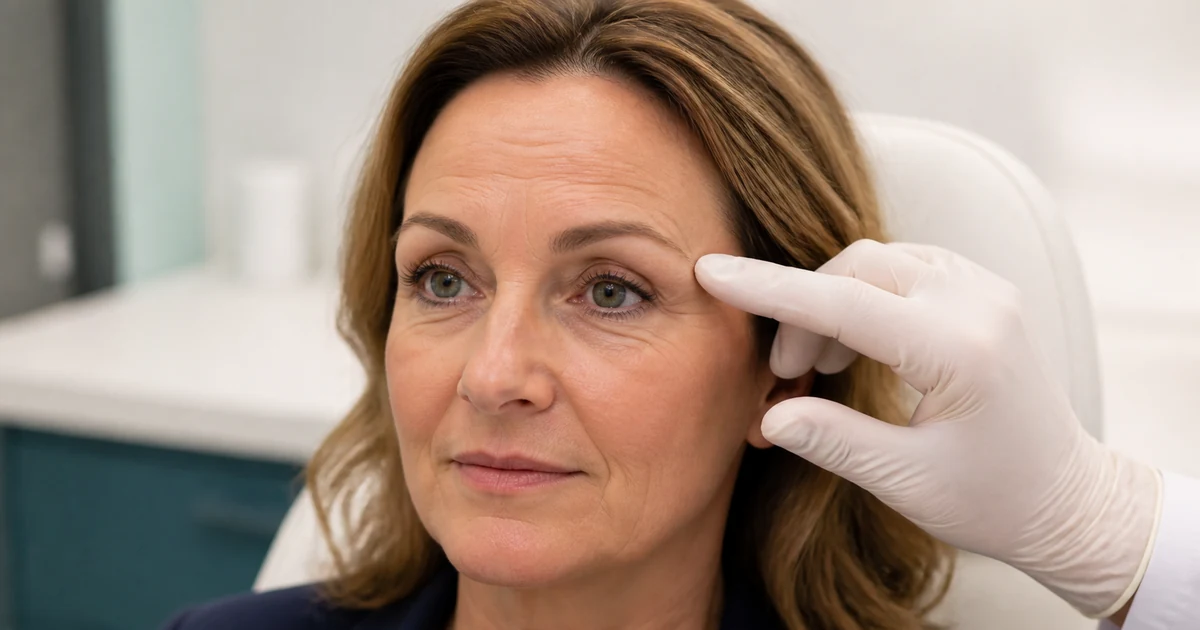
Performing blepharoplasty alone on a patient whose real problem is brow droop can remove upper-lid skin without fixing the underlying brow position — and in some cases can make the brow appear to sit even lower once the visual "cushion" of loose lid skin is gone. A surgeon assessing this properly will typically manually elevate your brow with a finger during examination to see how much of the improvement comes from brow position alone, before recommending blepharoplasty, a brow lift, or both.
Am I a Candidate?
Good candidates have a genuinely descended or heavy brow rather than isolated eyelid skin excess, realistic expectations about a natural (not over-lifted) result, and are otherwise fit for general anaesthesia — see Am I Suitable for Cosmetic Surgery? for the general health and expectation factors that apply across procedures. As with any facial cosmetic procedure, it's worth checking whether a prospective surgeon holds RCS England's voluntary cosmetic surgery certification2 in this specific procedure.
Health Factors That Matter
Smoking impairs healing of the scalp incisions and is usually required to stop for a defined period around surgery. Patients on blood-thinning medication need a joint decision with their prescribing doctor about timing. A stable hairline and hair density are also worth discussing at consultation, since the incision location for endoscopic and temporal techniques is chosen partly to stay hidden within hair-bearing skin — a very high or receding hairline can limit which technique gives the best-concealed result, and should be raised early rather than discovered as a surprise afterwards.
Techniques
- Endoscopic: small incisions behind the hairline with a keyhole camera guiding the dissection and lift. Least scarring of the three approaches; suits modest-to-moderate lifts and is the most commonly used technique in current UK practice.
- Temporal (limited-incision): incisions in the temples only, without the full endoscopic approach across the forehead. Effective specifically for lifting the outer (lateral) brow, which is often the area that droops first and most visibly.
- Coronal (open): a longer incision across the top of the scalp, from ear to ear. An older technique, used less often today than a decade ago, but still appropriate for some patients needing a larger lift or with other reasons to prefer open access; the scar is hidden in hair-bearing skin but is longer than with the other two approaches.
How the Lifted Position Is Secured
Regardless of technique, once the brow and forehead tissue is repositioned, it needs to be held in its new, higher position while the deeper tissues heal and re-anchor themselves — commonly using small, temporary or permanent anchoring devices, sutures, or a combination, depending on the surgeon's preferred technique and the amount of lift needed — a systematic review of long-term outcomes found fixation method itself influences results, with tined-implant fixation trending toward greater lateral brow elevation but higher rates of altered sensation than suture fixation4. This anchoring is part of why some early post-operative tightness and a sensation of the scalp being "pulled" is normal and expected in the first couple of weeks.
Avoiding the "Surprised Look"
Over-elevating the brow gives an unnatural, permanently startled appearance that is very difficult to miss in a photograph and, once healed, is not easily corrected. Current UK practice favours modest, brow-specific repositioning rather than blanket elevation of the entire forehead — the goal in most cases is to restore a more youthful, alert brow position, not to create an artificially high one. Bringing photos of yourself from your 20s, if you have them, gives your surgeon a genuinely useful, personal reference point for how much lift actually suits your face, rather than working from a generic idea of an "ideal" brow shape that may not match your own bone structure and features.
The Procedure & Anaesthetic
A brow lift is usually performed under general anaesthetic and is typically a day case, though some clinics keep patients overnight if the procedure is combined with other surgery or if a patient lives far away. Surgery generally takes one to two hours depending on the technique used and whether it's combined with blepharoplasty or another facial procedure in the same session. A separate GMC-registered anaesthetist manages the anaesthetic throughout, and their fee should appear as its own line on your quote — see Anaesthetic and Safety.
After the appropriate incisions are made for the chosen technique, the surgeon lifts and repositions the brow and forehead soft tissue, sometimes also softening the muscles responsible for frown lines between the brows as part of the same procedure, before securing the new position and closing the incisions with sutures, staples, or a combination, depending on location.
Recovery Timeline
- Days 1–5: forehead and eyelid swelling and bruising, often more than patients expect since gravity carries swelling down towards the eyes; some numbness or itching along the scalp incisions is normal as small sensory nerves recover.
- Week 1–2: sutures or staples removed; most patients are presentable with a fringe or hairstyle covering the incision line, and bruising has substantially faded.
- 2–4 weeks: back to office work; swelling continues to settle gradually; strenuous exercise, heavy lifting and anything raising blood pressure to the head are still restricted.
- 3 months: residual swelling gone and the lifted brow position settled into what is close to its final look, though very subtle further softening can continue a little longer.
Sleeping with your head slightly elevated for the first week or two helps manage swelling, and washing scalp incisions gently as directed reduces the (already low) risk of infection at the incision sites.
Risks
- Bruising, swelling and temporary forehead numbness or itching — usually resolves over weeks to a few months as small sensory nerves recover.
- Asymmetry between the two brows — a genuine risk with any bilateral lift, usually minor where it occurs.
- Hair thinning or loss along the incision line — usually temporary and regrows, though can occasionally be more persistent, particularly with the coronal technique's longer incision.
- Over-correction giving the "surprised look" described above — a technique and planning issue as much as a complication, and difficult to fully reverse once healed.
- Scarring — usually well concealed within hair-bearing skin, but visible in patients with very fine or thinning hair, or where the incision is placed too far forward.
- Bleeding or haematoma — uncommon; occasionally needs a return to theatre to drain.
- Anaesthetic risk — the general risks of any general anaesthetic, which should be discussed directly with the anaesthetist; see Anaesthetic and Safety.
Longevity and Botox as a Temporary Alternative
Results last many years — commonly cited as 5 to 10 years or more, depending on technique, skin quality and the individual pace of ageing, with a long-term systematic review confirming a generally favourable safety profile and durable elevation over years of follow-up4 — but forehead skin continues to age afterwards, meaning a brow lift resets the clock rather than stopping it permanently. Botox is sometimes described as offering a shorter-term "chemical brow lift" by relaxing the muscles that pull the outer brow down, producing a subtle, temporary elevation. NHS guidance on choosing a cosmetic practitioner1 includes specific safety advice for botulinum toxin injections, including checking the prescriber, injector, training and insurance arrangements. Either way, the effect on the brow from Botox is limited to the outer brow and does not surgically address a genuinely descended brow position or the loose skin and tissue that comes with it. Botox is a short-term, more limited alternative, useful for patients not ready for surgery or wanting to trial a subtle lift first, but it is not a substitute for surgery where the brow position itself needs to change structurally.
Cost in the UK
Typical UK private cost is £4,000–£7,000, depending on technique, whether it is combined with blepharoplasty or other facial procedures, and surgeon and facility. A fair quote should itemise the surgeon's fee, the anaesthetist's fee, the facility fee, dressings, a defined number of follow-up appointments, and a written revision policy, each as its own line. See the full breakdown of what a quote should include, and how to compare quotes safely, in the UK brow lift cost guide. See also the master UK cosmetic surgery cost table for how this compares with other procedures. It is not funded on the NHS for cosmetic reasons.
Choosing a Surgeon
Check the GMC Specialist Register before booking anyone — "cosmetic surgeon" is not a protected title in the UK, so GMC registration and Specialist Register entry (Plastic Surgery, or a facial plastic/oculoplastic specialism) is the most useful single check available to patients. Ask how many brow lifts the surgeon performs each year, which technique they favour and why, and ask to see their own results at 3 months in a neutral expression — not marketing photos taken in flattering lighting shortly after surgery.
FAQ
Do I need a brow lift or eyelid surgery?
It depends on whether the heaviness comes from brow position or upper-lid skin. A proper assessment checks both — often by manually elevating the brow during examination — before recommending either operation, or both together.
Will I look permanently surprised?
Not with modern, conservative technique. Ask to see a surgeon's own case examples at 3 months, in a neutral expression, rather than marketing photos.
Can Botox replace a brow lift?
No. Botox can lift the outer brow slightly for 3–4 months, but it cannot reposition a genuinely descended brow or address loose tissue the way surgery does.
Is a brow lift available on the NHS?
No. Brow lift is considered cosmetic and is not NHS-funded, regardless of your local ICB.
Which technique is best — endoscopic, temporal or coronal?
None is universally "best" — endoscopic suits most modest-to-moderate lifts with the least scarring, temporal is effective for outer-brow-specific lifting, and coronal suits larger lifts or particular anatomical needs. The right choice depends on your brow position, hairline and the amount of lift required.
How long does a brow lift last?
Commonly 5 to 10 years or more, though this varies with skin quality, technique and how your face ages afterwards. The forehead continues to age normally after surgery — a brow lift resets brow position rather than permanently halting the ageing process.