How a Surgical Wound Heals: The Phases Behind Every Scar
A scar's appearance at any given point is really a visible marker of where the underlying wound-healing process has got to. In general terms, healing happens in overlapping stages: an initial phase in the first few days where the body stops bleeding and begins clearing the wound; a proliferative phase over the following weeks where new blood vessels and collagen are laid down to rebuild the tissue — this is largely why a young scar looks pink or red and can feel slightly raised or firm; and a much longer remodelling phase, lasting many months and sometimes up to two years, where that collagen is gradually reorganised and the scar fades and flattens. Understanding this sequence is useful because it explains why a scar that looks alarming at three weeks is often entirely normal, and why judging the final result too early is a common source of unnecessary worry.
The Scar Maturation Timeline
As NHS.uk's page on scars1 explains, scars naturally change in appearance over time as they heal, and most will fade over time, though this can take up to two years or more, and a scar itself never fully disappears. A commonly used general staging, seen across procedures on this site, is:
- Around 6 weeks: red or pink and slightly raised, sometimes itchy.
- Around 3 months: softer and fading toward pink as blood supply to the scar reduces.
- 12–18 months: pale, flat and largely settled for most people.
- Up to 2 years: some further, more subtle fading can still occur.
Individual healing varies — location on the body, skin type, tension on the wound, wound depth, and genetics all affect the pace, so these ranges are a general guide rather than a promise for any one person's scar.
Hypertrophic vs Keloid Scars: What's the Difference
Most surgical scars follow the ordinary maturation path above, but a minority develop into one of two recognised patterns of excessive scarring. Getting the distinction right matters, because the two are managed differently. Per NHS.uk1:
- Hypertrophic scars are usually raised and firm, but stay within the boundary of the original wound. They can feel uncomfortable or restrict movement early on, but they usually fade and flatten over time without needing active treatment.
- Keloid scars are usually raised, hard and smooth, and — the key difference — grow larger than the original wound, extending into surrounding skin that was never cut. Keloids do not usually flatten or fade on their own and typically need dedicated treatment.
Some skin types and some body sites are more commonly associated with keloid scarring than others — the chest, shoulders, upper back, earlobes and jawline are frequently mentioned examples — and a personal or family history of keloid scarring makes a new one somewhat more likely. This is a known biological tendency, not a sign that anything went wrong with the surgery or the aftercare, and it's worth mentioning any previous keloid or hypertrophic scarring to your surgeon before any procedure, since it can influence incision placement and aftercare planning.
Practical Scar-Care Measures
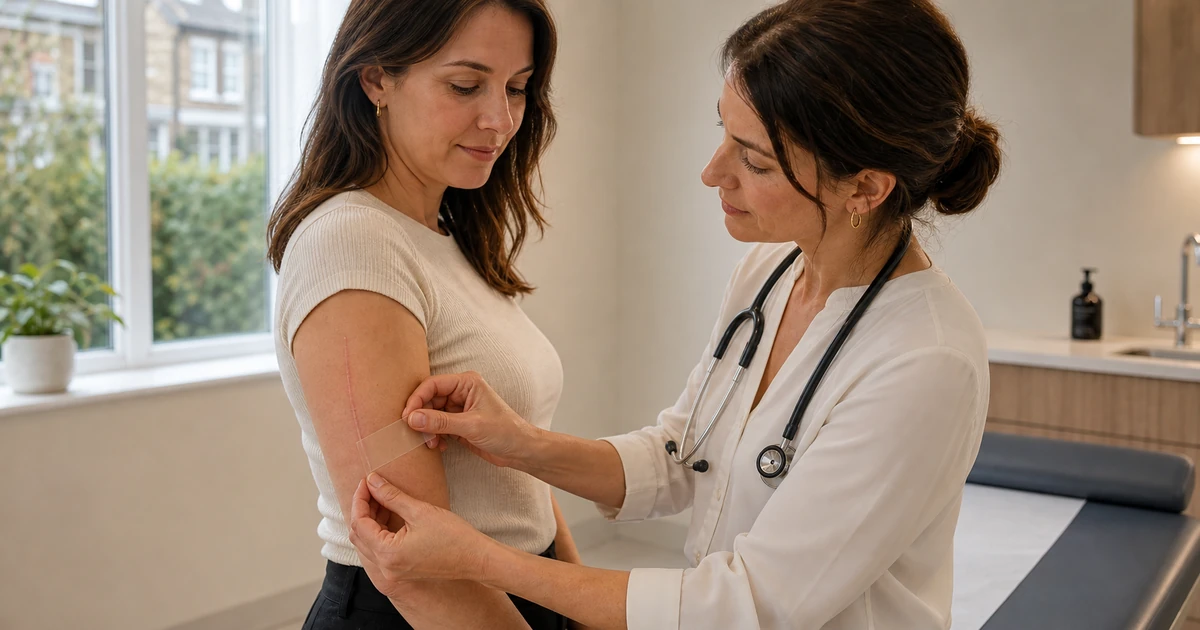
- Silicone sheets or gel: widely recommended once a wound has fully closed, typically used daily over some weeks to months. A Cochrane systematic review of silicone gel sheeting for preventing and treating hypertrophic and keloid scars4 found it may improve scar appearance and reduce the risk of abnormal scarring, though the authors rated the certainty of much of the underlying evidence as low, reflecting small and variable trials rather than a clear negative finding. In practice, silicone remains one of the lowest-risk, most widely recommended options — but it should be seen as a modest, supportive measure rather than a guaranteed fix.
- Sun protection: new scars are more prone to visible pigmentation change in sunlight. NHS.uk's general sun-safety guidance5 recommends at least SPF 30 with at least 4-star UVA protection for everyday sun protection; applying this principle to a healing scar — keeping it covered or using an appropriate sunscreen once your surgeon confirms the wound is ready for it — for at least a year is a common recommendation among surgeons.
- Massage: once a wound is fully healed and your surgeon has given the go-ahead, gentle scar massage is often suggested to help soften tissue. Don't start this before you've been told it's safe to.
- Avoid smoking: smoking impairs wound healing and can worsen scar quality — a further reason to stop around the time of surgery.
These general scar-care principles are echoed in the British Association of Aesthetic Plastic Surgeons' patient information on scars and keloids2, which likewise describes scars fading over roughly 6 to 24 months and recommends pressure garments, silicone sheeting and sun protection — the specific incision pattern differs by operation, but the underlying maturation process and care measures are the same.
What Scar Treatments Can — and Can't — Do
It's worth being honest about the limits of scar-care products. Silicone, sun protection and massage can support a flatter, softer, less noticeable scar, but none of them, alone or combined, removes a scar or guarantees an invisible result — a claim sometimes implied by marketing for over-the-counter "scar removal" creams and gels. Where a scar is genuinely problematic — persistently thickened, keloid, or causing real discomfort — NHS.uk1 notes that further options such as steroid injections, cryotherapy or laser therapy exist, but these are clinical treatments delivered and monitored by a doctor or dermatologist, not something to self-manage at home. If you're considering any scar product, it's reasonable to be sceptical of dramatic before-and-after claims and to ask your surgeon which specific product, if any, they recommend for your incision.
Realistic Expectations
Scars fade substantially; they do not disappear. Even a well-healed, expertly placed scar remains visible on close inspection, though it becomes far less noticeable over time and is often easily hidden by position, clothing or hair depending on the procedure. Genetics play a real part in how any individual scar matures, and — as covered above — some skin types are naturally more prone to hypertrophic or keloid scarring. As a general principle reflected in NHS.uk's overview of cosmetic procedures3, every cosmetic procedure carries some risk of a less-than-perfect scar outcome, which is why realistic expectations are part of any proper pre-surgery consultation.
When a Scar Needs a Review
Most scars need nothing more than the general measures above and time. Contact your clinic or GP if a scar:
- Becomes increasingly thick, hard or raised well beyond the normal maturation window, or is a keloid that keeps growing.
- Is persistently painful, itchy or tender long after the expected healing period, or restricts movement.
- Is swollen or painful, feels warm to the touch, or has pus coming from it — these are possible signs of infection rather than normal healing, and NHS.uk1 lists them as reasons to seek urgent advice rather than waiting. See our warning signs guide for the fuller picture of when post-surgical symptoms need urgent attention.
FAQ
How long until a surgical scar fades?
Most scars mature over roughly 12–18 months, moving from red and raised, to pink, to pale and flat, with some further subtle fading possible for up to two years. Individual healing pace varies by location, skin type and genetics.
What's the difference between a hypertrophic and a keloid scar?
A hypertrophic scar is raised but stays within the original wound and usually settles on its own. A keloid scar grows beyond the wound's edges into surrounding skin and typically needs active treatment, as it rarely flattens by itself.
Does silicone gel actually help scars?
A Cochrane review found silicone sheeting may improve scar appearance, though the certainty of much of the evidence is rated low. It remains one of the most widely recommended, lowest-risk scar-care measures — a modest support rather than a guaranteed fix.
Will my scar disappear completely?
No — scars fade significantly but remain visible on close inspection. No product or technique removes a scar entirely. That's a normal, expected outcome rather than a complication or a sign of poor surgical technique.
When should I get a scar checked?
Contact your clinic or GP if a scar keeps growing, becomes increasingly thick or painful well beyond the expected healing window, or shows possible infection signs — swelling, warmth or pus. These need review rather than watchful waiting.