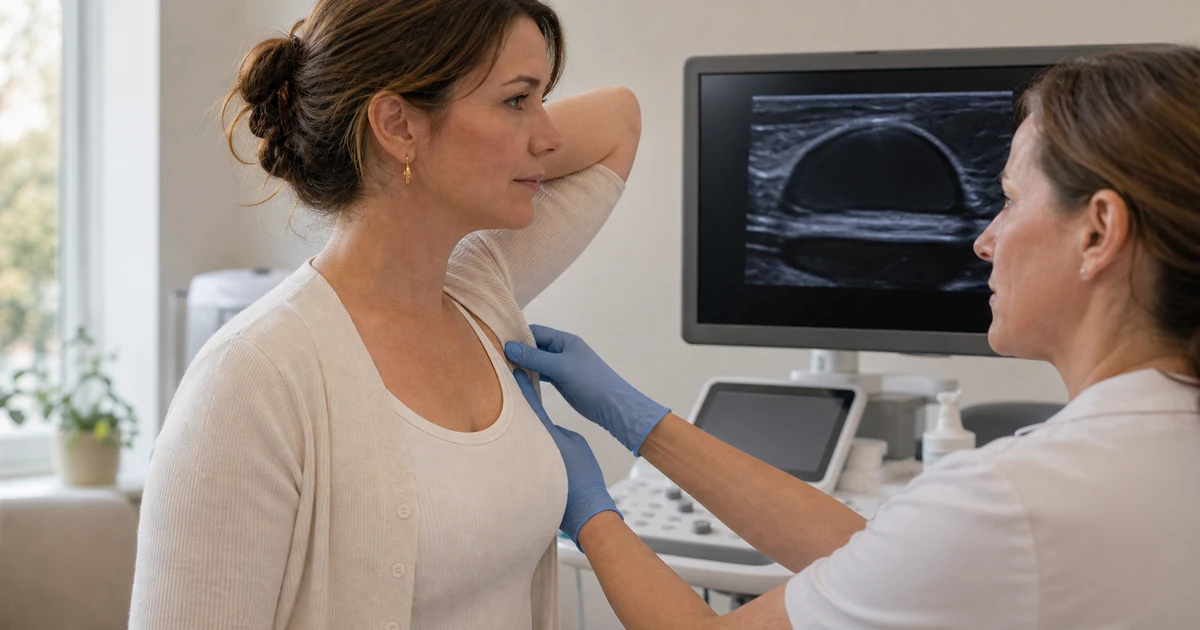
What People Report
"Breast Implant Illness" (BII) is not a formal medical diagnosis — it is a term patients themselves adopted to describe a cluster of systemic symptoms they associate with the timing of their breast implants. Commonly reported symptoms include persistent fatigue, joint and muscle pain, cognitive difficulties often described as "brain fog", hair loss, skin rashes, dry eyes and mouth, sleep disturbance, headaches, low mood and gastrointestinal complaints. A UK patient-centred review of the published evidence found these symptoms are genuinely wide-ranging and non-specific6 — meaning the same symptom list can also be produced by many unrelated conditions, from thyroid disorders to chronic fatigue syndrome to menopause.
Some patients report meaningful improvement in one or more symptoms after their implants are removed; improvement is not universal, and it is genuinely difficult to study in a controlled way given how much timing, implant type, surgical technique and each patient's baseline health all vary. BAAPS patient guidance5 describes BII as "a poorly defined general illness" rather than dismissing the symptoms themselves. Taking the reports seriously means neither assuming implants are automatically responsible nor waving the symptoms away — it means proper clinical investigation, the same as for any unexplained systemic complaint.
What Research Says So Far
Multiple research groups have tried to establish whether specific systemic symptoms are caused by breast implants, and the results are genuinely mixed rather than settled. A large Israeli population study following more than 24,000 women with silicone breast implants found a modestly increased rate of certain autoimmune and rheumatic diagnoses compared with women without implants3, though the authors were careful to note that a population-level statistical association is not proof of individual causation, and the effect sizes involved were small. Other observational cohorts have found no statistically significant difference in systemic symptom rates between women with and without implants.
No study to date has established a specific biological mechanism by which silicone or saline implants would cause the full symptom cluster patients describe, and there is currently no diagnostic blood test or scan that can confirm or rule out BII. A 2024 UK review covering symptom patterns across the published literature concluded that while capsulectomy and implant removal are not curative in every case, a meaningful proportion of patients do report symptom improvement afterwards6 — evidence that something real is often happening, even where the precise mechanism remains unclear. Research is active, and a responsible clinician neither claims causation is proven nor dismisses what patients are experiencing.
BIA-ALCL Is Different
BIA-ALCL is a specific, defined type of non-Hodgkin T-cell lymphoma that develops in the fibrous capsule the body forms around a breast implant. It is rare — independent UK sources drawing on the same evidence base as the MHRA's Plastic, Reconstructive and Aesthetic Surgery Expert Advisory Group guidelines4 put the risk at roughly 1 in 15,000 to 24,000 implants placed (not people — the risk is generally expressed per implant rather than per patient) — and it is associated overwhelmingly with textured-surface implants rather than smooth ones. Typical presentation is a seroma (a fluid collection around the implant) appearing on average eight to ten years after surgery, or less commonly a new lump within the scar capsule itself; sudden breast swelling in the first weeks after surgery is very rarely BIA-ALCL and is far more often a routine post-operative seroma. See the American Association of Plastic Surgeons consensus statement led by Clemens and Myckatyn2 for current international diagnostic and staging concepts.
The MHRA1 maintains patient guidance and a reporting route for suspected cases. When BIA-ALCL is confirmed, treatment is surgical removal of the implant together with the surrounding capsule; prognosis is typically favourable when the disease is diagnosed and treated at an early stage, which is why any late-onset seroma is investigated rather than assumed to be routine.
Textured Implants and Risk Context
The link between BIA-ALCL and implant surface texture is one of the more established findings in this area — macro-textured implants carry a materially higher documented risk than smooth or micro-textured devices, which is why certain macro-textured products were voluntarily withdrawn from some markets, including the UK, following the identification of this association4. This does not mean every textured implant will cause a problem; the great majority of people with textured implants never develop BIA-ALCL.
Current UK guidance is clear that patients with textured implants who have no symptoms should not have them removed purely as a preventive measure1 — explant surgery carries its own real risks, and prophylactic removal of a well-functioning implant is not currently recommended practice. The advice instead is to know your implant type where possible, understand the seroma/lump warning signs described above, and seek assessment promptly if either appears, rather than seeking removal in the absence of any symptom.
Implants Are Not Lifetime Devices
Separately from BII and BIA-ALCL, breast implants are not designed or warranted to last forever. Manufacturer data and long-term surgical follow-up both point the same way: rupture rates rise with the number of years an implant has been in place, capsular contracture (firm scar tissue tightening around the implant) can develop at any point, and even a well-functioning implant will eventually need replacing or removing as a patient's body, preferences or health change over the decades. None of this is unique to BII or BIA-ALCL — it is simply the honest lifespan of an implanted medical device, and it is worth reading alongside the cost implications set out in Breast Surgery Costs in the UK, which covers the long-term financial picture of choosing implants.
Because of this, most reputable surgeons build routine monitoring into aftercare — clinical review, and imaging such as ultrasound or MRI where a rupture is suspected — rather than presenting implants as a one-off, permanent solution. Anyone choosing between implants and a volume-neutral alternative should weigh this ongoing commitment; see Breast Lift or Implants? How to Decide for how that comparison is usually made.
Explant Surgery: What It Involves
Explantation removes the implant. The main options are:
- Simple explant — the implant is removed and the existing capsule is left in place, typically appropriate where there is no suspicion of BIA-ALCL and the capsule itself is thin and uncomplicated.
- Total capsulectomy — the implant and the surrounding capsule are both removed, usually in one or more pieces.
- En bloc capsulectomy — the implant and capsule are removed together as a single, unopened unit, without the implant being cut or the capsule breached during removal. Clinical discussion is active on when this more technically demanding approach is genuinely necessary versus when a standard total capsulectomy is sufficient2.
For confirmed or strongly suspected BIA-ALCL, complete capsulectomy — with en bloc technique where feasible — is the recommended approach, since capsule tissue may contain disease. For BII, where there is no cancer diagnosis to guide the decision, the choice of technique is patient-led, following an honest discussion of what any given approach can and cannot promise in terms of symptom relief. No surgeon can currently guarantee that explant surgery will resolve BII symptoms.
If You Have Symptoms
Book a GP appointment if you have new or persistent systemic symptoms, whether or not you suspect they are connected to your implants — a GP can arrange the standard investigations needed to rule out more common causes first. A new lump, a seroma or unexplained breast swelling — especially more than a year after your original surgery — also warrants prompt assessment, ideally through the surgeon or clinic that performed your original operation, or via GP referral if that is not possible. This is not self-diagnosis territory: BII has no confirmatory test, and a lump or seroma needs proper clinical and, where indicated, pathological assessment rather than assumption in either direction.
Some situations need urgent same-day attention rather than a routine appointment: severe or rapidly worsening breast pain, a fast-enlarging swelling, fever, or any sign of systemic illness following recent surgery. These warrant NHS 111 or, for the most severe presentations, 999 — do not wait for a routine follow-up slot if symptoms are escalating quickly.
FAQ
Is Breast Implant Illness real?
Patients report real, often distressing symptoms — fatigue, joint pain, brain fog and more. Whether these are specifically caused by implants, rather than another condition, has not been proven by research so far, though studies are ongoing. BII is taken seriously clinically, but it is not yet a defined medical diagnosis.
What is BIA-ALCL?
BIA-ALCL is a rare, well-defined cancer that develops in the scar capsule around some breast implants, mainly textured ones. UK estimates put the risk at roughly 1 in 15,000 to 24,000 implants placed. It is monitored by the MHRA and is unrelated to Breast Implant Illness, a separate and less well-defined condition.
Should I have my implants removed?
Not routinely for prevention, even with textured implants — surgery carries its own risks. If you have new symptoms, a lump, or a late seroma, get assessed by a GP or your original surgeon first. Whether to proceed with explant surgery afterwards is a personal, informed decision made with your clinician.