What Otoplasty Changes
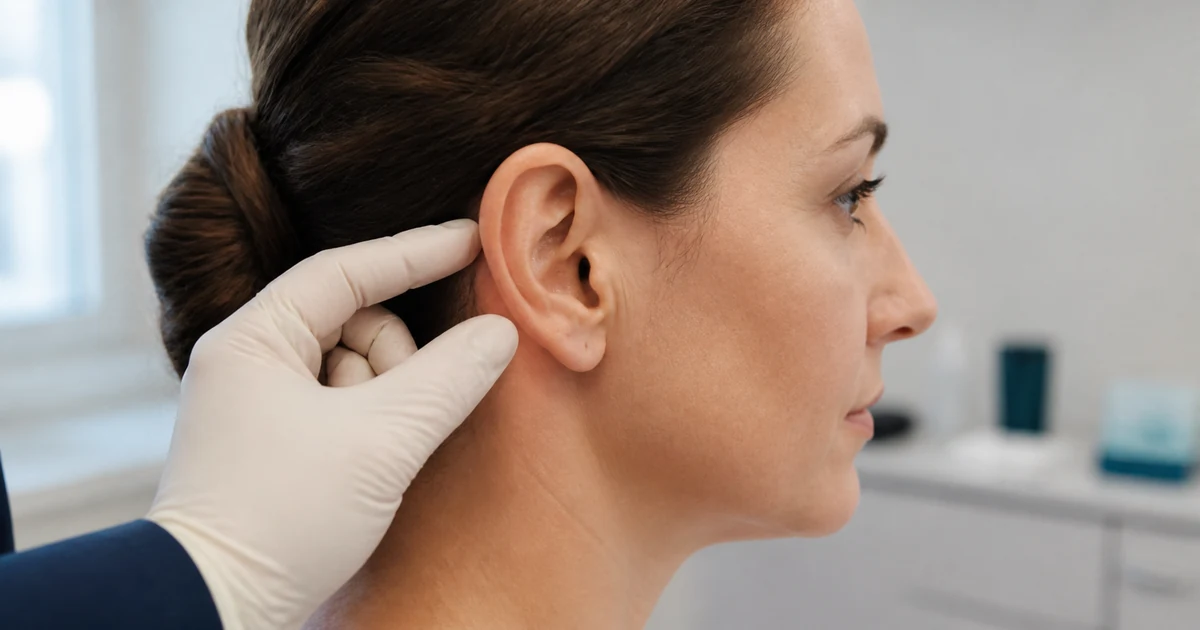
According to NHS.uk on ear correction surgery1, otoplasty changes the size or shape of prominent ears, or pins them back closer to the head. In practice this most often means defining the antihelix — the inner fold of cartilage that, when underdeveloped, is one of the most common reasons ears sit further from the head than average. Scars sit behind the ear, hidden in the natural crease and, where relevant, the hairline. The operation changes the position and shape of the ear itself; it does not affect hearing, which depends on the structures of the inner ear rather than the shape of the external ear.
Timing: Why Age Matters
Ear growth is largely complete by around age 5, which is why surgery is generally not carried out before then — operating on cartilage that hasn't finished developing makes the eventual, adult-proportioned result harder to predict. Results in children and adults are broadly similar from a technical standpoint; children tend to heal quickly and have more pliable cartilage to work with, but emotional readiness for surgery is more variable at younger ages and is treated as a separate consideration from physical readiness in UK practice.
The Child's Own Wish Matters
UK ethical guidance requires doctors to weigh the child's own understanding and wishes alongside those of parents and others close to the child when considering cosmetic surgery, with the weight given to each depending on the circumstances — and a doctor should not go ahead with a cosmetic procedure they judge the child does not want, even where a parent has consented. The GMC's ethical guidance for doctors on treating children and young people3 sets out this balancing principle. This is worth taking seriously beyond the ethical requirement: children who undergo surgery reluctantly, or primarily to satisfy a parent's wishes rather than their own, generally report less satisfaction with the outcome. A 2025 study examining how observers perceive children before and after otoplasty4 found the picture is genuinely more complicated than "surgery simply improves how a child is seen" — postoperative photographs weren't uniformly rated more positively across every social measure by the adult observers surveyed, which suggests the real psychosocial benefit for a child may have more to do with their own increased confidence and reduced self-consciousness than with any dramatic shift in how others perceive them at a glance. That is, if anything, a good reason to centre the child's own wish and reported distress in the decision, rather than the family's assumption about how others will react. See Otoplasty for Children on the NHS for how this plays out specifically in NHS funding assessments.
Am I (or My Child) a Candidate?
Per BAAPS patient information2, suitable candidates are old enough for ear growth to be complete (generally from around age 5, though many families wait longer), understand and want the surgery themselves where a child is involved, and are otherwise fit for the planned anaesthetic. Adults of any age with prominent ears they wish to address are also candidates, on a private basis — a meaningful proportion of otoplasty patients are adults who either didn't have the option as children or have grown more bothered by the appearance of their ears over time. General health considerations include no active ear infection or skin condition at the surgical site, and — for adults considering local anaesthetic with sedation — being comfortable remaining still and calm through the procedure.
The Operation and Anaesthetic
Otoplasty is usually performed under general anaesthetic in children, and can sometimes be done under local anaesthetic with sedation in adults, typically taking 1 to 2 hours depending on whether both ears are treated and how much cartilage reshaping is needed. The operation reshapes or resets the cartilage fold — often using permanent or long-lasting sutures to create or reinforce the antihelical fold — and, where the ear stands too far from the head, sets it back closer to the skull with internal sutures anchoring the cartilage to the tissue behind the ear. See Anaesthetic Options and Safety for a general overview of what to expect from either approach.
Relapse and Asymmetry
Cartilage has memory — some relapse toward the original position can occur regardless of technique, and small asymmetries between the two sides are common even with a technically excellent result, since most people's ears are not perfectly symmetrical to begin with. A 2025 retrospective study of 365 patients comparing three otoplasty techniques5 found the recurrence rate varied substantially by method: around 30% with a suture-only (Mustardé) technique, falling to under 10% with a fascioperichondrial flap technique, and around 8–9% with a combined approach. This is a meaningful difference, and one worth asking your surgeon about directly — including which technique they use routinely and why, rather than assuming all approaches carry similar odds of the ear settling back over time. Realistic before-and-after comparisons show results at 6–12 months rather than the immediate postoperative appearance, since early swelling can make the position look more secure than it will ultimately settle.
Recovery Timeline
A protective headband is worn day and night for about 1 week, then night-only for a further 4–6 weeks to protect the new ear position while the tissues heal and settle around it. Most children and adults are back at school or work at 1 week, once initial swelling and bruising have subsided enough to be comfortable in public. Contact sports, swimming and any activity that risks a direct blow to the ear are typically restricted for 4–6 weeks, sometimes longer for contact sports specifically.
Risks
- Bruising, swelling and temporary discomfort, particularly in the first week — the most common and expected after-effects.
- Relapse toward the original ear position, and asymmetry between the two ears, at rates that vary meaningfully by technique (see above).
- Scar visibility behind the ear, usually inconspicuous once healed but occasionally more prominent in patients prone to hypertrophic scarring.
- Suture-related problems — a permanent suture can occasionally work its way to the surface (extrusion) or cause a small area of irritation (granuloma), particularly with suture-based techniques.
- Haematoma — a collection of blood under the skin of the ear; uncommon, but needs prompt attention if severe pain or a tense swelling develops, since ear cartilage can be permanently damaged if a haematoma isn't drained quickly.
- Infection — uncommon but worth reporting promptly if redness, warmth or discharge develops, given the same risk to the underlying cartilage.
NHS Funding for Children
Otoplasty is unusual among the procedures on this site because it may sometimes be funded by the NHS for children — but only where prominent ears are causing documented psychosocial impact, such as persistent teasing, bullying or distress, and where the child themselves understands and wants the surgery. It is not funded on parental preference or appearance alone, and adults are essentially never NHS-funded. Read the full criteria and process in Otoplasty for Children on the NHS.
Private Cost If Not NHS-Funded
Typical UK private cost is £3,000–£5,500, for children and adults alike — the price depends mainly on whether general or local anaesthetic is used and the surgeon's experience, rather than age itself. A fair, itemised quote should list the surgeon's fee, the anaesthetist's fee where relevant, the facility fee, and a defined number of follow-up appointments. See the master UK cosmetic surgery cost table for how this compares with other procedures.
Choosing a Surgeon
Otoplasty is performed by plastic surgeons and by ENT surgeons with a specific interest in ear surgery — both are legitimate routes provided the individual operates on prominent ears regularly. Check the GMC Specialist Register, and given how much technique choice appears to affect relapse rates, ask directly which technique your surgeon uses routinely, how often they've seen relapse in their own patients, and what their revision policy covers.
Frequently Asked Questions
What age can otoplasty be done?
Ear growth is largely complete by around age 5, so surgery is generally not performed younger. Many UK families wait somewhat longer, both so the child's ear shape is fully settled and so the child can meaningfully take part in the decision themselves.
Do ears move back to their original position over time?
Some relapse can occur because cartilage has a natural tendency to spring back, and published outcome data shows relapse rates differ meaningfully by surgical technique — from under 10% to around 30% in some series. Choice of technique is one of the more important, and most discussable, decisions at consultation.
Can otoplasty be funded on the NHS?
Sometimes, for children with documented psychosocial impact — such as persistent teasing or distress — where the child themselves wants the surgery and simpler measures haven't helped. Adults are essentially never NHS-funded. See our dedicated NHS otoplasty guide for the full referral pathway.
How much does otoplasty cost in the UK?
Private otoplasty in the UK typically costs £3,000–£5,500 for children and adults alike. The price depends mainly on whether general or local anaesthetic is used and the surgeon's experience, rather than on age itself.
Does otoplasty hurt?
There is discomfort rather than severe pain for most patients, typically managed with standard analgesia for the first few days. The sensation of pressure from the protective headband and mild itching as swelling settles are usually more noticeable than sharp pain.