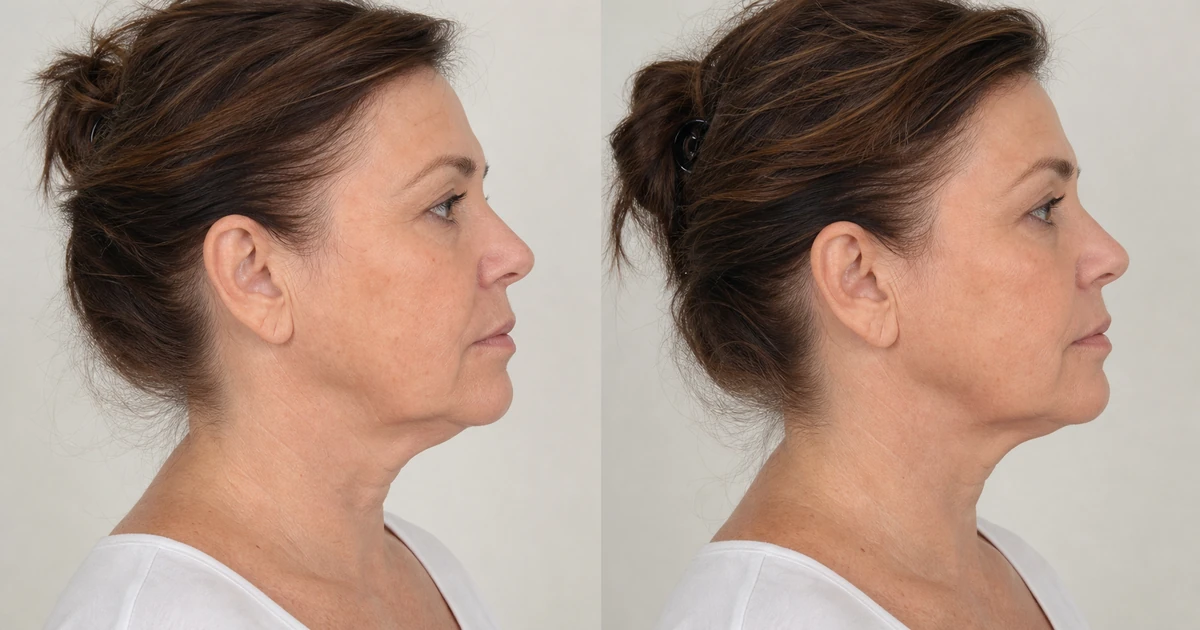
What a Neck Lift Addresses
Three problems, usually together:
- Loose neck skin that has descended with age.
- Platysmal bands — visible vertical cords from the platysma muscle.
- Loss of jawline definition — jowling and fullness under the jaw.
A neck lift that addresses these bands directly usually involves a technique called platysmaplasty — either stitching the two muscle edges back together along the midline, removing a strip of muscle to reduce bulk, or both — typically performed through a small incision under the chin. Loose skin is separately addressed by lifting and redraping it, usually through incisions behind the ear, and any excess fat sitting just under the chin or along the jawline may be removed or contoured at the same time. Because these are genuinely separate problems within the same area, a good consultation should identify which of the three — skin, muscle or fat — is contributing most to an individual's appearance, since that determines which parts of the operation matter most for that patient rather than applying a single standard technique to everyone.
The relative weight of these three problems also tends to shift with age and body type. Younger patients considering a neck lift more often have prominent platysmal bands and stubborn fat with only mild skin excess, since their skin still has reasonable elasticity — this group sometimes does well with a more limited procedure focused mainly on the muscle and fat rather than an extensive skin lift. Older patients, or those who have lost significant weight, more often present with genuine skin excess that needs to be physically removed and redraped, because skin that has been stretched for years does not spring back on its own even once the muscle beneath is tightened. Recognising which pattern applies is one of the main things a surgeon is assessing during the physical examination at consultation, often by asking the patient to tense the neck muscles, tilt the head back, and pinch the skin to gauge how much of the fullness is muscle, fat or loose skin.
Neck Lift vs Facelift vs Neck Liposuction
As NHS.uk's page on facelift surgery2 makes clear, a facelift and a necklift are usually considered together rather than as entirely separate operations — the same procedure is typically described as addressing loose skin around the lower face (mainly the jowls) and the neck, with incisions extended under the chin when the jawline and neck are also being lifted. A standalone neck lift is best understood as a smaller-scope version of that same overlapping procedure, focused specifically on the neck rather than the mid-face and jowls:
- Neck lift: skin + platysma of the neck only; incisions behind the ear ± under chin.
- Facelift (often including the neck): mid-face + jowls + neck addressed together as one repositioning; scars extending to the sideburn and behind the ear.
- Neck liposuction: removes fat only, as an additional or alternative option in some cases. Works only if skin will retract — best in younger patients with good elasticity. Deliberately outside this site's depth.
The practical question most patients are really asking is whether they need a neck lift on its own or a full facelift. As a rough guide, if the jowls and mid-face have also started to sag — nasolabial folds deepening, cheeks flattening, jawline blurring above the neck itself, not just below it — a neck-only procedure will leave the rest of the face looking untouched next to a rejuvenated neck, which can look mismatched rather than harmonious. Where the neck is the dominant concern and the rest of the face has aged comparatively well, a standalone neck lift avoids the larger scars and longer recovery of a full facelift. Many surgeons perform both together in appropriate candidates, since the incisions for the two procedures sit in overlapping locations, for a more consistent overall result.
Skin Quality Determines the Result
The best-executed neck lift on thin, sun-damaged skin gives a modest result. The same operation on well-preserved skin gives a striking one. This is because the surgery works by removing excess skin and redraping what remains under tension — it relies on the remaining skin having enough elasticity and thickness to sit smoothly against the tightened muscle beneath. Skin that has lost collagen and elastic fibres through age, sun exposure or smoking behaves more like thin paper than stretchable fabric, and even a technically excellent lift cannot fully compensate for tissue that has lost its underlying structural quality.
This is also why the same operation can look dramatically different from one patient's before-and-after photos to another's, even when performed by the same surgeon with the same technique — the variable isn't surgical skill so much as what the skin itself was capable of before surgery began. Ask your surgeon to be honest about this during consultation, ideally with reference to your own skin rather than a generic answer; a good one will manage expectations before they operate rather than let a gallery of someone else's dramatic result set an unrealistic bar. Non-surgical measures like sun protection and, in some cases, resurfacing treatments in the months before surgery can modestly improve skin quality, but they cannot substitute for the elasticity that genetics and decades of sun exposure have already determined.
Scars & Placement
Neck lift scars usually run behind the ear along the hairline, and — if the platysma is being tightened directly — sometimes a small incision under the chin, tucked into the natural shadow of the submental crease. Incision placement along the hairline and in front of/behind the ear is consistent with BAPRAS patient information on face and brow lift surgery3, and well-placed scars of this kind are generally inconspicuous once fully healed and matured, typically over the 6–12 month period referenced elsewhere in this guide. The behind-the-ear incision typically follows the natural fold where the ear meets the scalp and continues briefly into the hairline, which is why hairstyle and hair growth pattern are worth discussing with a surgeon beforehand — someone who prefers to wear their hair pulled back or very short will want the scar planned with that in mind.
As with the lip and brow procedures covered elsewhere on this site, timing matters enormously when judging scars from photographs: an incision at two weeks is still pink, slightly raised and clearly visible, while the same incision at six to twelve months has typically faded to a fine line that blends with the surrounding skin tone. A gallery that only shows early post-operative photos, or that consistently photographs patients with their hair covering the area behind the ear, makes it harder to judge how a particular surgeon's scars actually settle over time.
Recovery Behind the Photos
- Week 1: significant swelling and bruising; drains sometimes used.
- Weeks 2–4: most bruising resolved; back to office work; still swollen.
- 3 months: most swelling settled.
- 6–12 months: scars matured; final look apparent.
What a before-and-after gallery rarely shows is the texture of those first few weeks: a compression garment worn around the neck and chin for much of the first week or two to control swelling and support the newly tightened tissue, some tightness or a pulling sensation when turning the head, and a period where speaking, eating and swallowing feel slightly stiff and unfamiliar rather than painful. Numbness or altered sensation across parts of the neck is common in the first weeks or months as small sensory nerves recover from surgical disruption, and most patients describe the discomfort as manageable with prescribed pain relief rather than severe. Photos taken at the two-week mark, when many patients feel comfortable in public again, still typically show some residual swelling under the chin and along the jawline — comparing that stage directly to a fully healed, 12-month "after" photo elsewhere in the same gallery can create a misleadingly dramatic sense of overnight transformation.
Longevity
A neck lift lasts many years, but the neck continues to age — skin quality is not frozen, and the same slow loss of elasticity and collagen that caused the original loose skin and platysmal bands continues afterward at whatever pace it was already progressing. Most patients maintain a meaningful benefit over 10+ years, since the muscle repair (platysmaplasty) in particular tends to hold its position well once healed, even as the overlying skin gradually softens again with time. Weight gain or loss after surgery can also affect how long the result appears at its best, since significant weight change alters the volume of fat and skin in the area independently of what the surgery corrected.
FAQ
Is a neck lift the same as a facelift?
No. A facelift repositions the mid-face, cheeks and jowls in addition to the neck, using scars that extend toward the sideburn as well as behind the ear. A neck lift focuses specifically on neck skin and the platysma muscle. The two are often combined when both the face and neck have aged noticeably.
Will loose skin come back?
The operation removes excess neck skin and tightens the underlying platysma muscle, setting a new, firmer baseline. Ageing continues from that new starting point, so skin will gradually loosen again over years, but most patients keep a meaningful, lasting improvement compared to how the neck would have looked without ever having surgery.
How long is recovery?
Most patients return to office-based work around two weeks after a neck lift, once major bruising has faded, though some swelling and tightness can persist. Swelling largely settles by around three months, and the final, fully healed look — with scars matured and skin settled — typically isn't apparent until six to twelve months out.